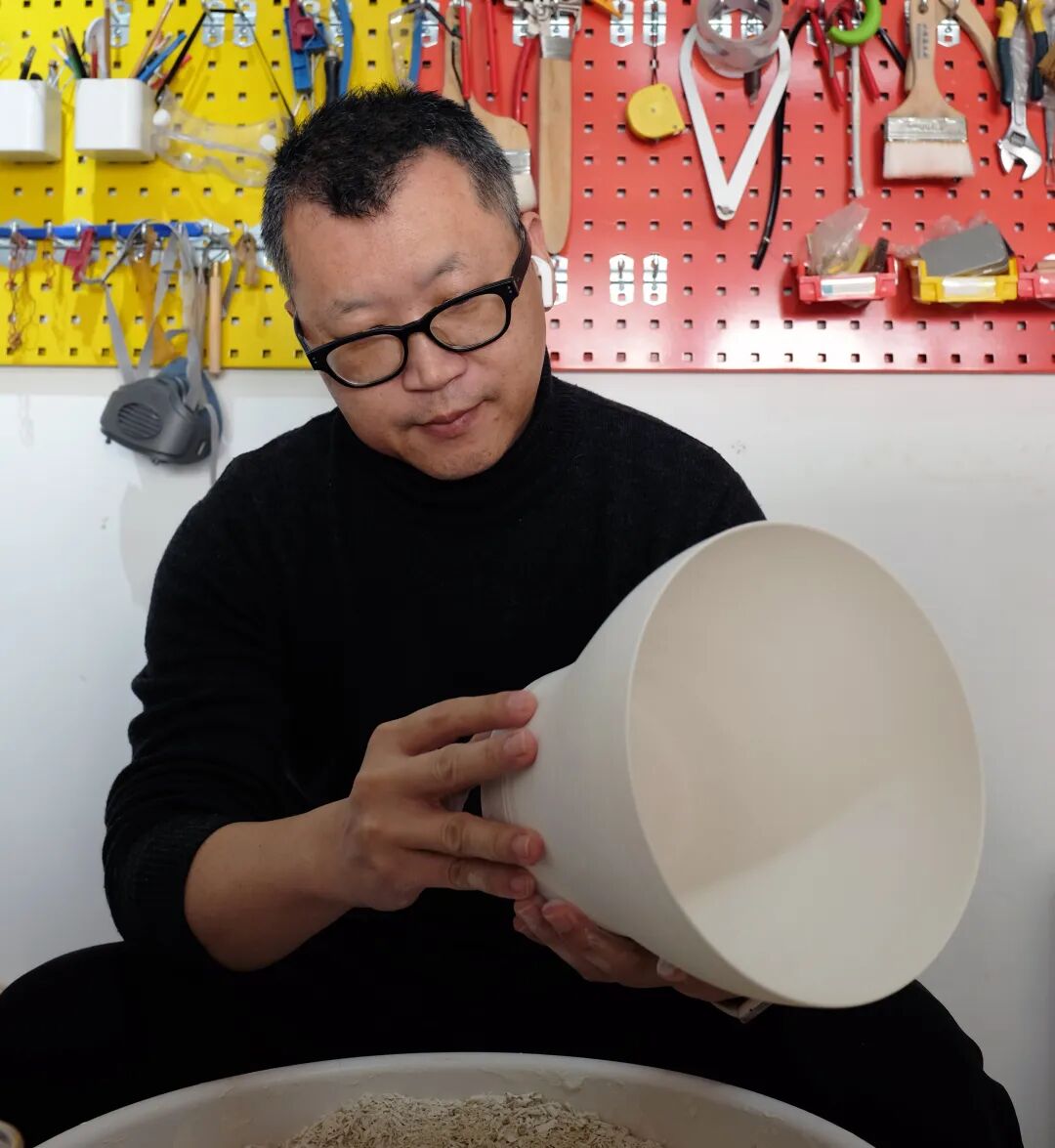
李程
鲁迅美术学院工艺美术设计学院院长、教授
中国美术家协会陶瓷艺术委员会委员
采访手记:
从一场展览出发,我们聊到教育、创作、传统与未来。陶瓷作为一种材质,既连着千年的土壤,也向着未知的世界。正如李程所说:知道自己源起何处,才能更清醒地走向未来。在快速变化的时代,这或许不止是陶瓷艺术的命题。
明年,双年展将与IAC大会携手,聚焦 “未来” 主题。当古老陶瓷遇上AI新技术,当全球陶艺力量汇聚景德镇,这场盛会注定将成为跨文化、跨地域的碰撞平台。当代陶艺面临的“表达与传承”之问,或许也将在这场碰撞中,找到更丰富的答案。
心有传统根基,眼观世界潮流,方能让陶瓷艺术在时代浪潮中始终保有生命力。
Q:于伶娜
A:李 程
Q:2023年第二届“瓷的旅程”双年展时,你特意在展厅看了一个多小时,有什么特别的印象吗?你觉得在景德镇举办国际性的陶艺双年展具有哪些独特优势?
A:作为高校任教的专业老师,我比较关注新涌现出来的年轻陶艺家,以及新风格的作品。第二届双年展最让我兴奋的,是看到很多年轻的新面孔——尤其是“95后”艺术家的作品。他们不仅在材料和技术上做实验,还融入了数字影像、互动装置,甚至探讨身份、环境、记忆这些更当下的议题。他们的作品风格更多样,实现手段更丰富、创作理念更自由。那种不被传统束缚的创作状态,让人感受到陶瓷艺术正在生长出新的活力。
我认为,在景德镇举办国际陶艺双年展有三大优势,一是文化优势,景德镇是中国面向世界的一张陶瓷文化名片,对世界陶瓷艺术的发展有着深远的影响和号召力。二是资源优势,景德镇拥有传承千年的高超的制瓷技艺,这个城市充满了活力,为陶瓷艺术的蓬勃发展提供了土壤。三是人才优势,景德镇陶瓷大学在陶瓷艺术领域具有强大的影响力、雄厚的人才优势、一流的策展团队、丰富的展览组织经验,实现了双年展的成功举办。
我国陶瓷艺术的进步和发展,需要年轻陶艺家的不断成长和加入,本次双年展给年轻陶艺家们提供了一个交流学习、展示自己的平台。同时也为陶瓷艺术人才培养了非发挥了非常大的作用,这也是本次展览的一大亮点。
Q:在陶艺界一直有一种声音,认为传统陶瓷产区的工艺美术类作品很难进入国际性的当代陶艺展。你的创作以传统器皿为主,如何看待这种现象?
A:我觉得不同的展览有不同的定位,就像电影节也会分主题和类型。陶瓷本身涵盖的范围太广了,很难有一个展览能覆盖所有门类,所以不必过分纠结“全面”,要有自己的特色和明确的学术方向。比如这三届景德镇双年展,从“瓷的精神”到“瓷的未来”,其实能看出它从“展示”逐渐转向“教育、传承与创新”的平台,这是一个很好的深化。
Q:你曾担任陶艺设计工作室主任,现在又是学院的副院长。从教育者的角度看,双年展与学院教育之间是怎样的关系?
A:双年展其实是陶艺教育的一种延伸,也是一个检验实践成果的场域。它不只是展示教学成果,更重要的是能让学生检验学习效果、反思创作方向。展览期间还有非遗展演、陶瓷电影展播这些平行活动,让学生接触到更丰富的创作语境。更重要的是,它推动着陶艺教育往跨学科、国际化、科技融合的方向发展,这也是未来高校陶艺教育要走的路,培养交叉学科、复合型人才就需要这样的平台。
Q:你会鼓励学生参加这类国际性的展览吗?对他们来说意味着什么?
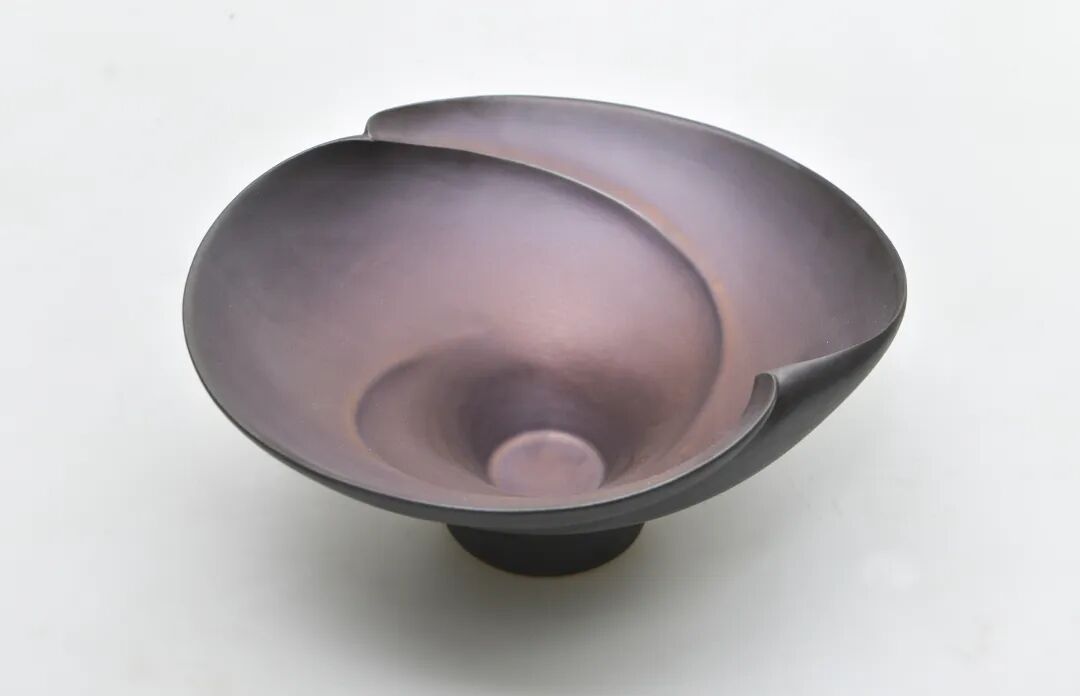
A:非常鼓励。我的研究生和同事都有投稿,去年还有学生拿到了不错的奖项。奖金不仅是对创作成果的认可,也能给后续创作提供资金支持。更珍贵的是,参展能带来国际曝光、学术交流、资源对接三个重要机会。年轻人可以和全球顶尖陶瓷艺术家、策展人、学者直接对话,展示自己的作品,建立更广阔的国际化创作视野,不局限于单一技艺或装饰风格的研究,这对他们长期的创作发展至关重要。
Q:你自己在2014年全国美展的获奖作品也是一件器皿。你是如何在传统基础上寻求当代突破的?
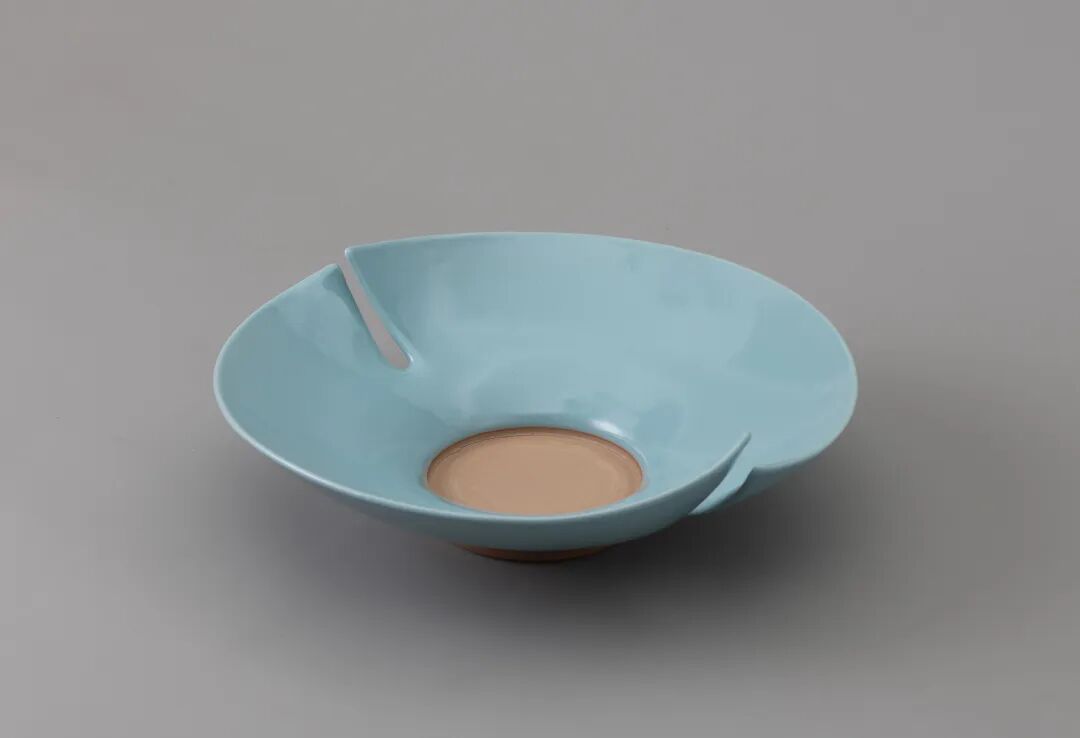
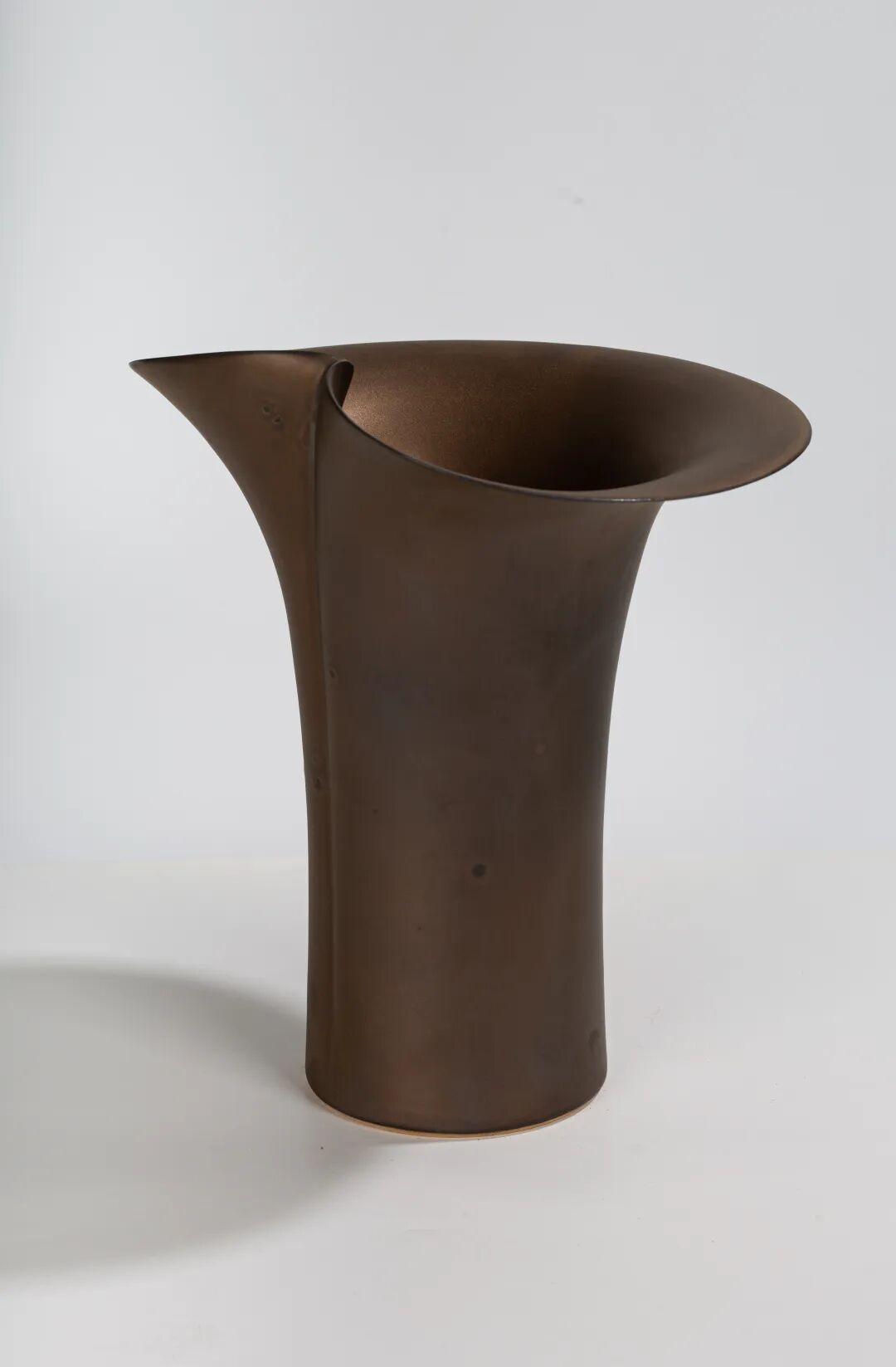
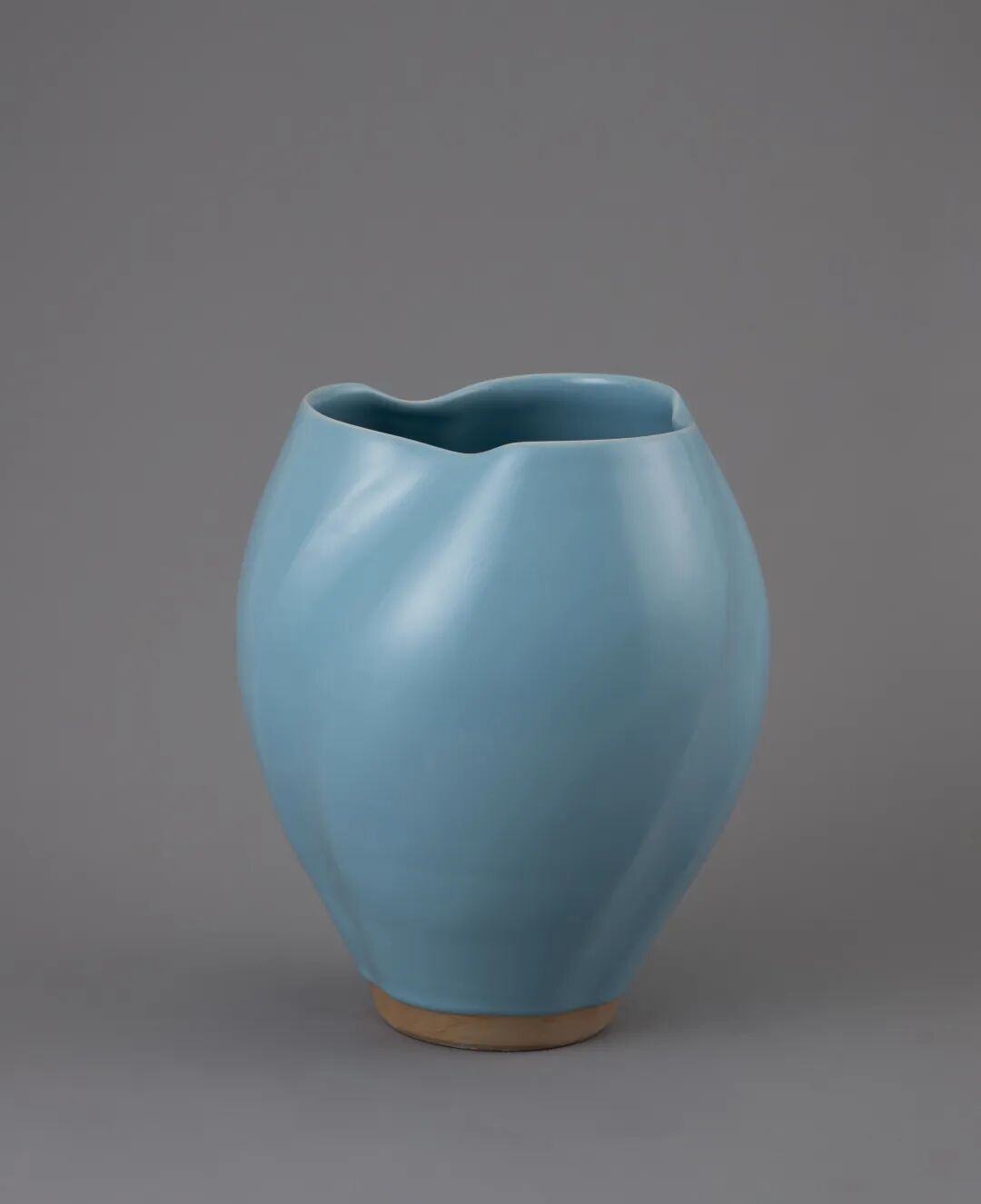
A:我当时主要是想研究器皿造型,以及线条和器型之间的关系。器型上做了一些简洁的变化;釉色上,我选择了北方青瓷的意象——北方天空那种“雨过天青”的氛围,和南方青瓷的气质不太一样。造型则借鉴了书法运笔的节奏感,让器物的轮廓线有呼吸、有起伏。
作品是基于我对陶瓷哲学的思考,借助器皿表达对传统的一种理解。算是用今天的视角,在传统范式上寻求一点个人的突破。传统对我来说不是一个固定样式,而是一种可被重新理解、转化的语言。
Q:现在似乎有两种极端:一种深陷传统难以跳脱,另一种则完全抛开传统,追求观念表达。你怎么看待这两种创作状态?
A:我觉得问题可能出在缺乏沟通。深耕传统、专注某一项工艺,不是坏事;把陶瓷当作观念媒材进行实验,也很有价值。但两者之间需要彼此了解。你可以选择自己的方向,但你不能完全不懂另一个维度在做什么。高校教育应该提供这种交流和判断的基础,既教工艺与历史,也引入当代艺术理论。
Q:你的作品底色还是传统陶瓷器皿范式,再结合当下视角创作。所以在你看来,传统与当代并不是对立的?
A:传统其实是流动的,今天的当代可能就是明天的传统。我们学习传统,不是复制过去,而是理解我们从哪里来——那是创作的根基。但同样,我们也要打开眼界,了解今天的世界正在发生什么。心是中国心,但不代表要盲目排斥外面的思维与方法。
Q:你觉得当代陶艺创作目前面临的最大挑战是什么?
A:可能是“表达”与“传承”之间的平衡。现在很多创作非常强调观念,这很好,但有时过于追求理念表达,反而会陷入一种“飘着”的状态,难以深入或者失去方向。
工艺是基础。如果我们完全抛弃工艺,创作也可能违背材料属性,变成空中楼阁。观念是上层的建筑,两者不矛盾。
我觉得健康的创作生态应该是:传承、创新、开放、协作。前提是传承,首先要了解中国陶瓷历史,知道自己是谁、从哪里来,要表达什么。这不代表要排斥其它文化的思维或艺术形式,了解是必要的,但心里要有个判断,如果过于追求表达而忘记这个前提,可能会陷入迷茫,甚至丧失自我。
Q:明年双年展将与国际陶艺学会(IAC)大会同时举行。你对这场“盛会”有什么特别期待?
A:“未来”这个主题很好。和IAC大会结合,能更全面、深入地探讨陶瓷与科技、环境、社会的关系。特别是在AI、AIGC流行的语境下,陶瓷——这门最古老也最当代的艺术,——如何与新技术、新语境对话,如何影响青年一代的创作,非常值得通过这样的平台展开交流。期待它能推动更多跨领域、跨文化的碰撞。
2026 “瓷的未来”景德镇国际陶艺双年展
报名截止时间:2025年12月31日
报名入口:
http://www.cjicb.com/News20251211.html
英文版
Exclusive Interview|Li Cheng:Engaging the Contemporary on a Foundation of Tradition
Interview Notes:
Starting from an exhibition, our conversation extended to education, creation, tradition, and the future. As a material, ceramics are rooted in millennia-old soil while simultaneously reaching toward an unknown world. As Li Cheng puts it, only by knowing where one comes from can one move toward the future with clarity. In a rapidly changing era, this may be not only a question for ceramic art, but a broader cultural proposition.
Next year, the Biennale will join hands with the IAC Congress, focusing on the theme of “the future.” When ancient ceramics encounter AI and new technologies, and whenglobal forces of ceramic artconverge in Jingdezhen, this event is destined to become a platform for cross-cultural and cross-regional dialogue. The long-standing question facing contemporary ceramic art—how to balance “expression and inheritance”—may find richer answers through such encounters.
With tradition rooted in the heart and the world in view, ceramic art can continue to maintain vitality amid the tides of the times.
Li Cheng
Dean and Professor, School of Arts and Crafts Design, Lu Xun Academy of Fine Arts
Member, Ceramic Art Committee of the China Artists Association
Q:Yu Lingna
A:Li Cheng
Q:During the second edition ofThe Journey of CeramicsBiennale in 2023, you spent over an hour observing the exhibition halls. What left a particularly strong impression on you? In your view, what unique advantages does Jingdezhen have in hosting an international ceramic art biennale?
A:As a university educator, I pay close attention to emerging young ceramic artists and new stylistic directions. What excited me most about the second Biennale was seeing so many new, young faces—especially artists born after 1995. They were experimenting not only with materials and techniques, but also incorporating digital video, interactive installations, and addressing very contemporary issues such as identity, environment, and memory. Their works were more diverse in style, richer in means of realization, and freer in creative thinking. That state of creation—unconstrained by tradition—made me feel that ceramic art is generating new vitality.
I believe Jingdezhen has three major advantages in hosting an international ceramic biennale. First is its cultural advantage: Jingdezhen is a global calling card of Chinese ceramic culture, with profound influence and appeal in the development of world ceramics. Second is its resource advantage: Jingdezhen possesses superb ceramic craftsmanship passed down for thousands of years. The city is full of vitality and provides fertile ground for the flourishing of ceramic art. Third is its talent advantage: Jingdezhen Ceramic University has strong influence in the field, abundant talent resources, a first-rate curatorial team, and rich experience in exhibition organization, all of which have contributed to the success of the Biennale.
The progress and development of Chinese ceramic art rely on the continuous growth and participation of young ceramic artists. This Biennale provides them with a platform for exchange, learning, and self-presentation, and also plays a significant role in cultivating ceramic art talent—one of the exhibition’s major highlights.
Q:There has long been a view in the ceramic art world that works rooted in traditional ceramic production regions and craft-based practices find it difficult to enter international contemporary ceramic exhibitions. Since your own work focuses largely on traditional vessel forms, how do you see this phenomenon?
A:I think different exhibitions have different orientations, just as film festivals are divided by themes and genres. Ceramics cover an extremely broad spectrum, and it’s unrealistic for any single exhibition to encompass everything. There’s no need to obsess over being “comprehensive”; what matters is having a clear identity and academic direction. Looking at the three editions of the Jingdezhen Biennale—fromTheSpirit of CeramicstoThe Future of Ceramics—you can see a gradual shift from pure “display” toward a platform emphasizing education, inheritance, and innovation. I think this is a very positive deepening process.
Q:You previously served as director of a ceramic design studio and are now a vice dean of the school. From an educator’s perspective, how do you see the relationship between the Biennale and academic education?
A:The Biennale is essentially an extension of ceramic education and a field for testing practical outcomes. It’s not just about showcasing teaching results; more importantly, it allows students to assess their learning, reflect on their creative direction, and reposition themselves. During the exhibition, there are parallel events such as intangible cultural heritage demonstrations and ceramic film screenings, which expose students to richer creative contexts.
More importantly, the Biennale promotes the development of ceramic education toward interdisciplinarity, internationalization, and technological integration. This is precisely the direction higher education in ceramics needs to take in the future. Cultivating interdisciplinary and compound talents requires platforms like this.
Q:Do you encourage students to participate in international exhibitions like this? What does it mean for them?
A:Very much so. My graduate students and colleagues have all submitted works, and last year some students even won awards. Prize money is not only recognition of their creative achievements but also provides financial support for further creation. More valuable, however, are the three key opportunities participation offers: international exposure, academic exchange, and resource networking.
Young artists can engage directly with top ceramic artists, curators, and scholars from around the world, present their work, and build a broader international creative perspective—one not confined to a single technique or decorative style. This is crucial for their long-term artistic development.
Q:Your award-winning work at the 2014 National Art Exhibition was also a vessel. How do you seek contemporary breakthroughs on a traditional foundation?
A:At that time, my main interest was in vessel form and the relationship between line and shape. I made some simplified variations in form. For glaze color, I adopted a northern celadon palette inspired by the“sky clearing after rain”hue—an image long associated with classical Chinese ceramic aesthetics and distinct from the sensibility of southern celadon. In terms of form, I drew on the rhythmic quality of calligraphic brushwork, allowing the vessel’s contour lines to breathe and undulate.
The work was based on my reflection on ceramic philosophy, using the vessel as a means to express an understanding of tradition. It was an attempt to seek a personal breakthrough within traditional paradigms, using a contemporary perspective. For me, tradition is not a fixed style, but a language that can be reinterpreted and transformed.
Q:Today, there seem to be two extremes: one deeply immersed in tradition and unable to break free, and the other abandoning tradition altogether in pursuit of conceptual expression. How do you view these two states?
A:I think the problem may lie in a lack of communication. Deep engagement with tradition and focused dedication to a particular craft is not a bad thing. Treating ceramics as a conceptual medium for experimentation is also very valuable. But the two need to understand each other.
You can choose your own direction, but you shouldn’t be completely ignorant of what’s happening in the other dimension. Higher education should provide the foundation for this exchange and discernment—teaching both craft and history, while also introducing contemporary art theory.
Q:Your work is grounded in traditional vessel paradigms while incorporating a contemporary viewpoint. So in your opinion, tradition and the contemporary are not opposites?
A:Tradition is actually fluid. Today’s contemporary may become tomorrow’s tradition. We study tradition not to replicate the past, but to understand where we come from—that is the foundation of creation. At the same time, we must broaden our horizons and understand what is happening in the world today.
One can have a Chinese heart, but that doesn’t mean blindly rejecting external ways of thinking or methods.
Q:What do you think is the greatest challenge facing contemporary ceramic art today?
A:Perhaps it is finding the balance between “expression” and “inheritance.” Many works today place strong emphasis on concepts, which is positive. But when conceptual pursuit becomes excessive, works can feel “floating,” lacking depth or direction.
Craft is the foundation. If we completely abandon craftsmanship, creation may contradict the nature of the material and become an empty structure. Concept is the upper level; the two are not contradictory.
A healthy creative ecology, in my view, should be based on inheritance, innovation, openness, and collaboration. Inheritance comes first: understanding Chinese ceramic history, knowing who you are, where you come from, and what you want to express. This doesn’t mean rejecting other cultures or art forms—understanding them is necessary. But one must maintain judgment. If expression overrides this foundation, confusion or even loss of self may follow.
Q:Next year, the Biennale will be held concurrently with the International Academy of Ceramics(IAC)Congress. Do you have any special expectations for this “grand event”?
A:The theme of “the future” is excellent. Combined with the IAC Congress, it allows for more comprehensive and in-depth discussion of the relationships between ceramics, technology, environment, and society. Especially in the context of AI and AIGC, it’s worth exploring how ceramics—one of the oldest yet most contemporary art forms—can dialogue with new technologies and contexts, and how this will influence the younger generation of artists.
I hope it will foster more cross-disciplinary and cross-cultural exchanges.
2026 “The Future of Ceramics” Jingdezhen International Ceramic Art Biennale
Registration Deadline:December 31, 2025
Registration Portal:
http://www.cjicb.com/News20251211.html
(责任编辑:兰茜 审稿:刘欢 兰茜)