News from JCU (Text: Li Chunhe, Hu Mengting, Liu Ying,Photos: Yan Yihan, Zou Yihan)
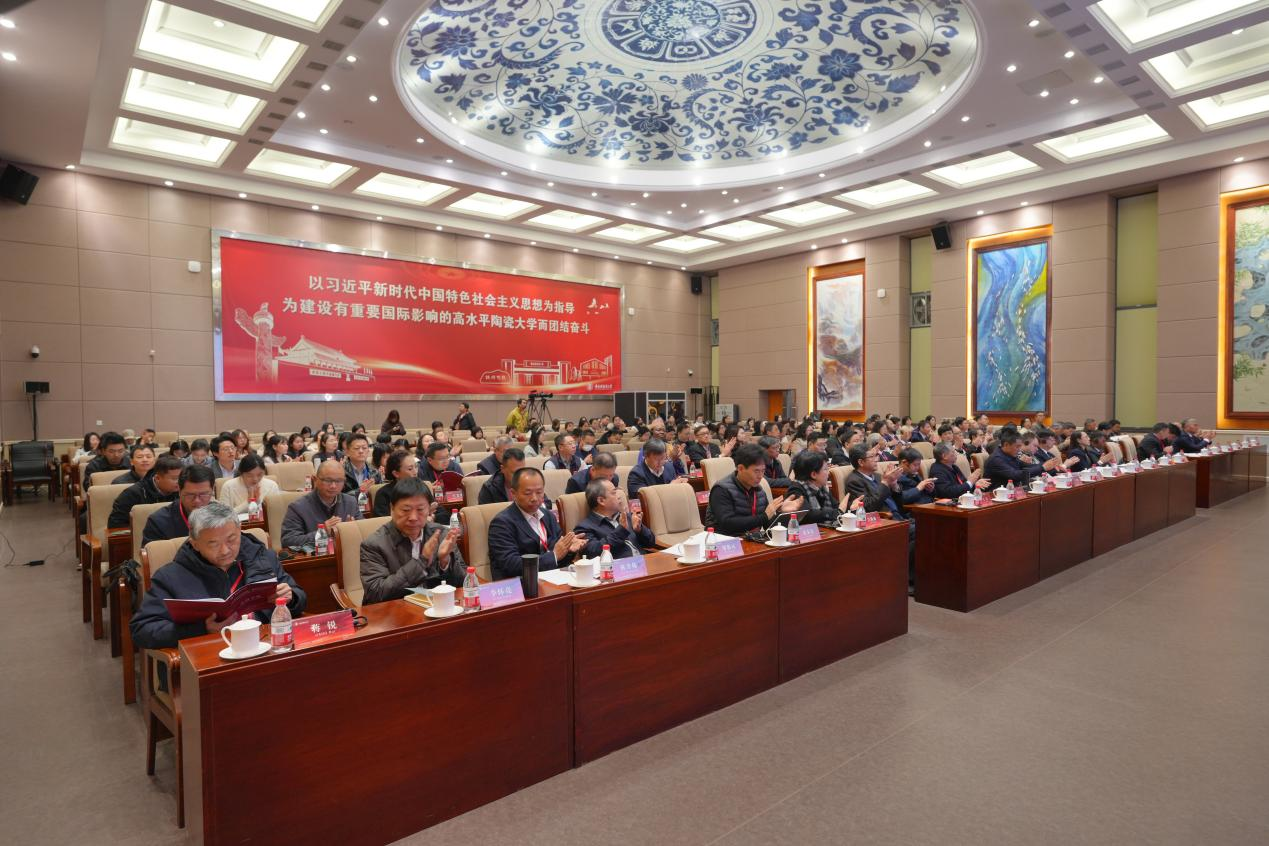
On March 21, the International Symposium on “ACommunity with a Shared Future for Mankind” was held at the Xianghu Campus of Jingdezhen Ceramic University (JCU). Opening remarks were delivered by Chen Yunping, Secretary of the Party Leadership Group of the Jiangxi Academy of Social Sciences, professor and doctoral supervisor; Wang Haibo, Deputy Secretary of the CPC Committee of JCU; Sergey Vasilyevich Ryazantsev, Corresponding Member of the Russian Academy of Sciences; Phạm Văn Đức, Member of the Central Theoretical Council of the Communist Party of Vietnam and Standing Vice President of the Vietnam Philosophical Association; Regla Yelenne Diaz Lazo, Head of Marxist Public Education at the University of Havana, Cuba; and Bishnu Rijal, Member of the Central Committee of the Communist Party of Nepal (Unified Marxist–Leninist). The opening ceremony was chaired by Wang Jinhai, Member of the Standing Committee of the CPC Committee of JCU and Secretary of the University’s Commission for Discipline Inspection.

The symposium brought together more than 200 participants, including international scholars from Russia, Vietnam, Cuba, Laos, Nepal, Cameroon, and Morocco, as well as experts, scholars, and outstanding doctoral students from over 30 universities and research institutes across China. The event consisted of an opening ceremony, keynote presentations, and parallel forums.
During the keynote session, 17 scholars from China and abroad delivered presentations examining the concept of “a Community with a Shared Future for Mankind” from multiple perspectives, including philosophy, culture, population studies, history, political party development, and international relations. Their discussions offered comprehensive and in-depth interpretations of the concept’s theoretical logic, cultural significance, and practical pathways, presenting a range of constructive and forward-looking insights.
The symposium also featured four parallel forums: “Community with a Shared Future for Mankind andPhilosophicalDevelopment,” “Community with a Shared Future for Mankind and Cultural Development,” “Community with a Shared Future for Mankind and the Development of Light Industry,” and “Academic Exchange for Young Doctoral Students.” Each forum focused on a specific research direction and invited renowned scholars and outstanding doctoralstudents from China and abroad to engage in in-depth dialogue. Participants discussed the application of the concept across various fields, sharing their research findings and practical experiences.

The symposium was jointly organized by Jingdezhen Ceramic University, the Jiangxi Philosophical Society, and the Ministry of Education Consortium for the Integrated Development of Ideological and Political Education across Primary, Secondary, and Higher Education (Jiangxi Province), and hosted by the School of Marxism at JCU. Supporting organizations included the editorial offices ofIssues ofContemporary World Socialism, Jiangxi Social Sciences, Journal of Jiangxi Normal University (Philosophy and Social Sciences Edition), and Journal of Nanchang University (Humanities and Social Sciences); the InstituteofContemporary Socialism at Shandong University, a Key Research Base of Humanities and Social Sciences under the Ministry of Education; and the Jiangxi Provincial Distinguished Teachers’ Studio for Ideological and Political Education (JCU).Centered on the theme of “ACommunity with a Shared Future for Mankind”, the symposium brought together the wisdom and expertise of scholars from diverse disciplines and countries through keynote speeches and parallel forums. From perspectives such as philosophical development, cultural development, and light industry culture, participants contributed valuable insights into both the theoretical research and practical exploration of the concept. The event not only deepened academic understanding of the idea but also established an international platform for cross-cultural, cross-regional, and cross-disciplinary exchange, promoting dialogue and mutual learning among scholars from China and abroad.