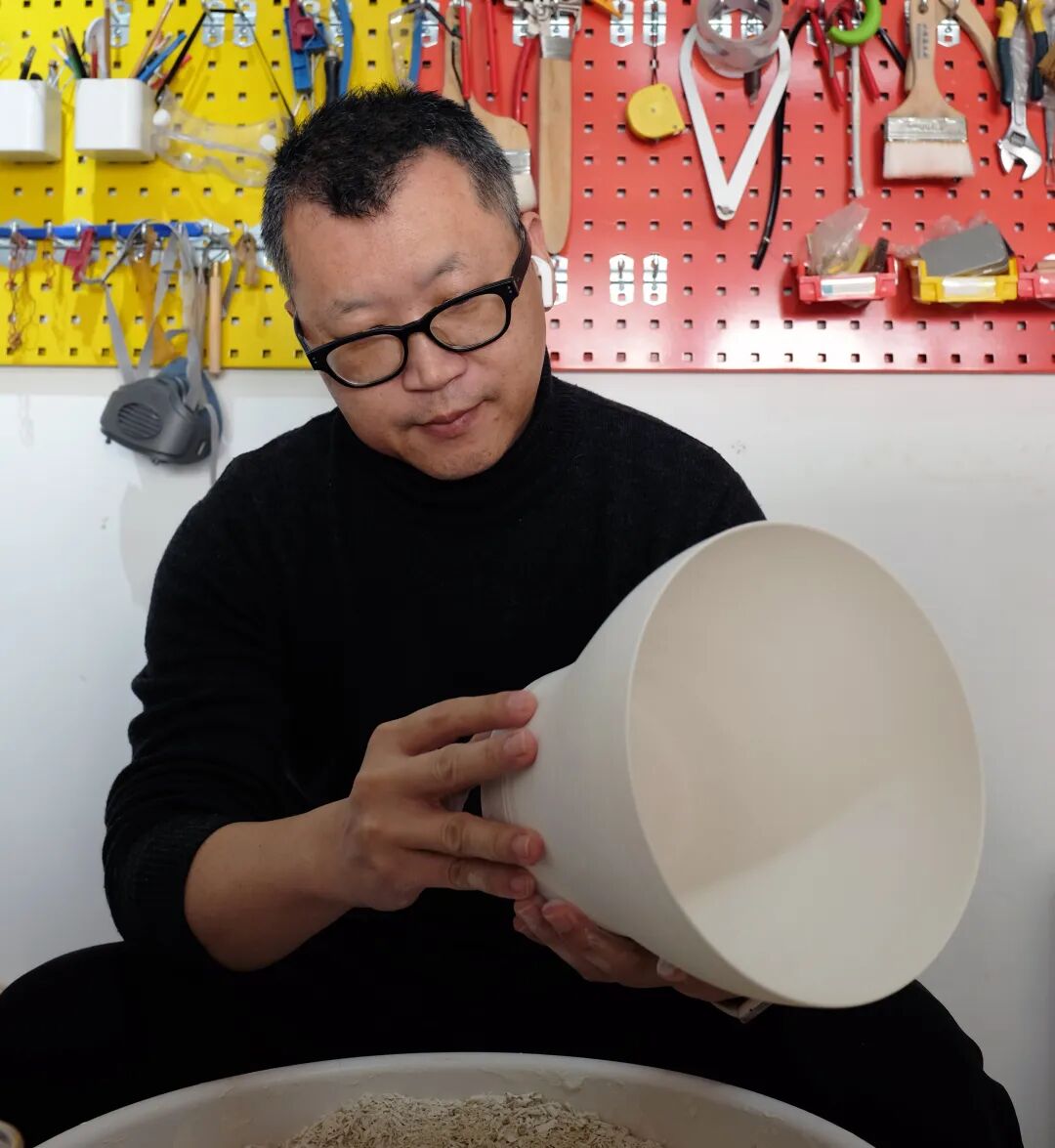
Li Cheng
Dean and Professor, School of Arts and Crafts Design, Lu Xun Academy of Fine Arts
Member, Ceramic Art Committee of the China Artists Association
Interview Notes:
Starting from an exhibition, our conversation extended to education, creation, tradition, and the future. As a material, ceramics are rooted in millennia-old soil while simultaneously reaching toward an unknown world. As Li Cheng puts it, only by knowing where one comes from can one move toward the future with clarity. In a rapidly changing era, this may be not only a question for ceramic art, but a broader cultural proposition.
Next year, the Biennale will join hands with the IAC Congress, focusing on the theme of “the future.” When ancient ceramics encounter AI and new technologies, and whenglobal forces of ceramic artconverge in Jingdezhen, this event is destined to become a platform for cross-cultural and cross-regional dialogue. The long-standing question facing contemporary ceramic art—how to balance “expression and inheritance”—may find richer answers through such encounters.
With tradition rooted in the heart and the world in view, ceramic art can continue to maintain vitality amid the tides of the times.
Q:Yu Lingna
A:Li Cheng
Q:During the second edition ofThe Journey of CeramicsBiennale in 2023, you spent over an hour observing the exhibition halls. What left a particularly strong impression on you? In your view, what unique advantages does Jingdezhen have in hosting an international ceramic art biennale?
A:As a university educator, I pay close attention to emerging young ceramic artists and new stylistic directions. What excited me most about the second Biennale was seeing so many new, young faces—especially artists born after 1995. They were experimenting not only with materials and techniques, but also incorporating digital video, interactive installations, and addressing very contemporary issues such as identity, environment, and memory. Their works were more diverse in style, richer in means of realization, and freer in creative thinking. That state of creation—unconstrained by tradition—made me feel that ceramic art is generating new vitality.
I believe Jingdezhen has three major advantages in hosting an international ceramic biennale. First is its cultural advantage: Jingdezhen is a global calling card of Chinese ceramic culture, with profound influence and appeal in the development of world ceramics. Second is its resource advantage: Jingdezhen possesses superb ceramic craftsmanship passed down for thousands of years. The city is full of vitality and provides fertile ground for the flourishing of ceramic art. Third is its talent advantage: Jingdezhen Ceramic University has strong influence in the field, abundant talent resources, a first-rate curatorial team, and rich experience in exhibition organization, all of which have contributed to the success of the Biennale.
The progress and development of Chinese ceramic art rely on the continuous growth and participation of young ceramic artists. This Biennale provides them with a platform for exchange, learning, and self-presentation, and also plays a significant role in cultivating ceramic art talent—one of the exhibition’s major highlights.
Q:There has long been a view in the ceramic art world that works rooted in traditional ceramic production regions and craft-based practices find it difficult to enter international contemporary ceramic exhibitions. Since your own work focuses largely on traditional vessel forms, how do you see this phenomenon?
A:I think different exhibitions have different orientations, just as film festivals are divided by themes and genres. Ceramics cover an extremely broad spectrum, and it’s unrealistic for any single exhibition to encompass everything. There’s no need to obsess over being “comprehensive”; what matters is having a clear identity and academic direction. Looking at the three editions of the Jingdezhen Biennale—fromTheSpirit of CeramicstoThe Future of Ceramics—you can see a gradual shift from pure “display” toward a platform emphasizing education, inheritance, and innovation. I think this is a very positive deepening process.
Q:You previously served as director of a ceramic design studio and are now a vice dean of the school. From an educator’s perspective, how do you see the relationship between the Biennale and academic education?
A:The Biennale is essentially an extension of ceramic education and a field for testing practical outcomes. It’s not just about showcasing teaching results; more importantly, it allows students to assess their learning, reflect on their creative direction, and reposition themselves. During the exhibition, there are parallel events such as intangible cultural heritage demonstrations and ceramic film screenings, which expose students to richer creative contexts.
More importantly, the Biennale promotes the development of ceramic education toward interdisciplinarity, internationalization, and technological integration. This is precisely the direction higher education in ceramics needs to take in the future. Cultivating interdisciplinary and compound talents requires platforms like this.
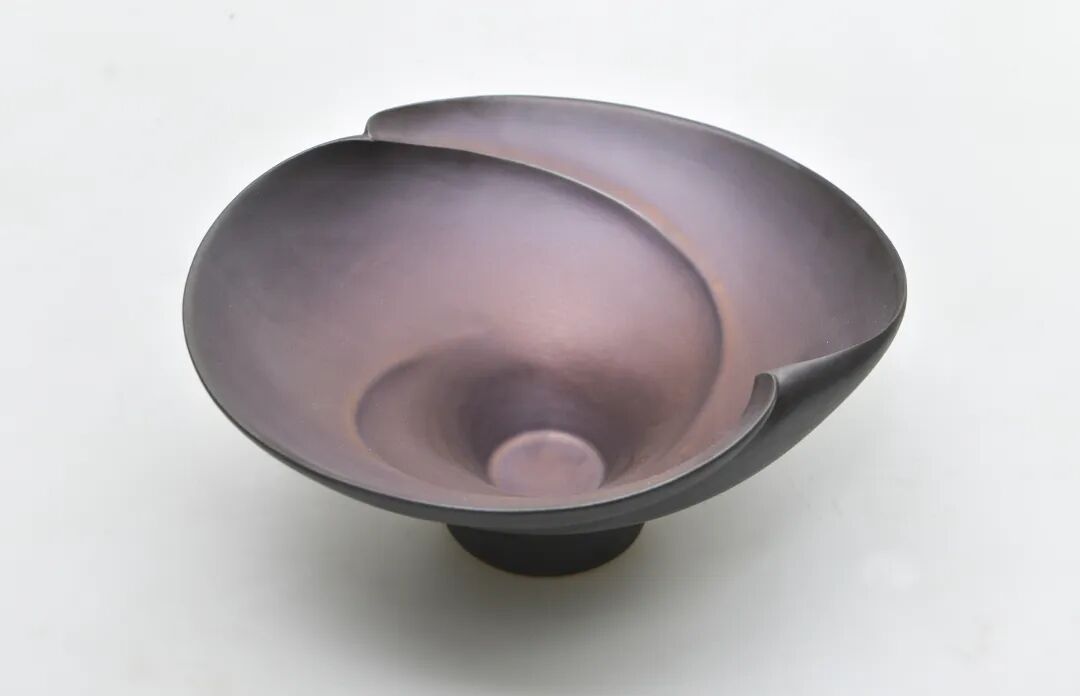
Q:Do you encourage students to participate in international exhibitions like this? What does it mean for them?
A:Very much so. My graduate students and colleagues have all submitted works, and last year some students even won awards. Prize money is not only recognition of their creative achievements but also provides financial support for further creation. More valuable, however, are the three key opportunities participation offers: international exposure, academic exchange, and resource networking.
Young artists can engage directly with top ceramic artists, curators, and scholars from around the world, present their work, and build a broader international creative perspective—one not confined to a single technique or decorative style. This is crucial for their long-term artistic development.
Q:Your award-winning work at the 2014 National Art Exhibition was also a vessel. How do you seek contemporary breakthroughs on a traditional foundation?
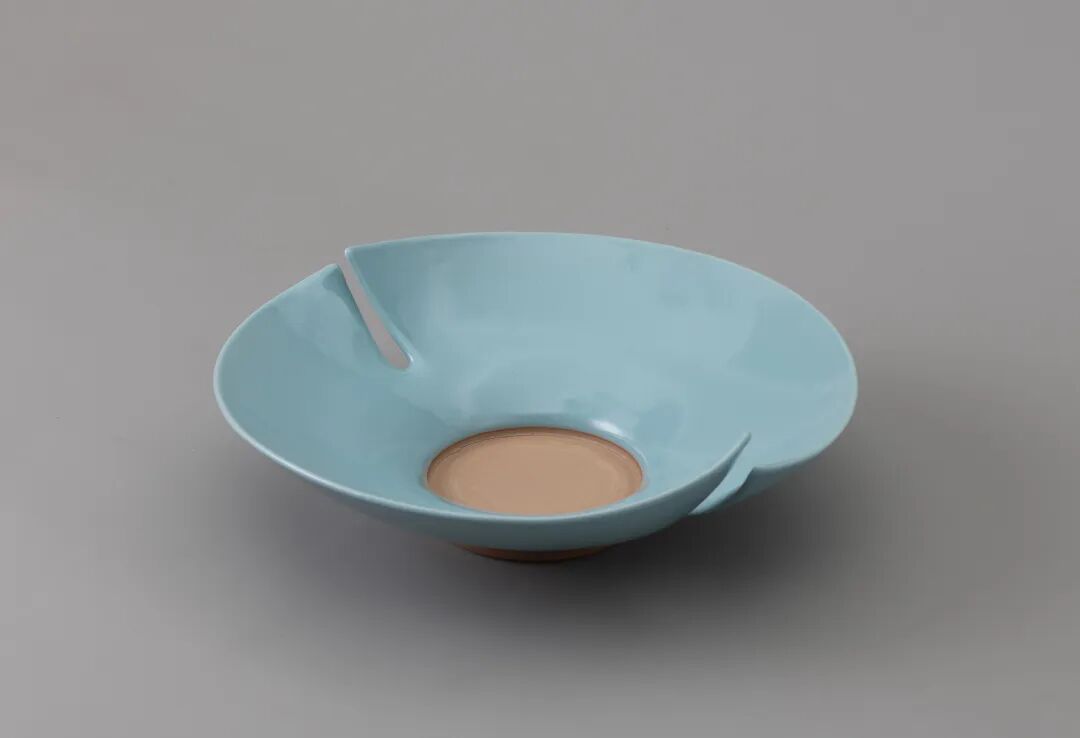
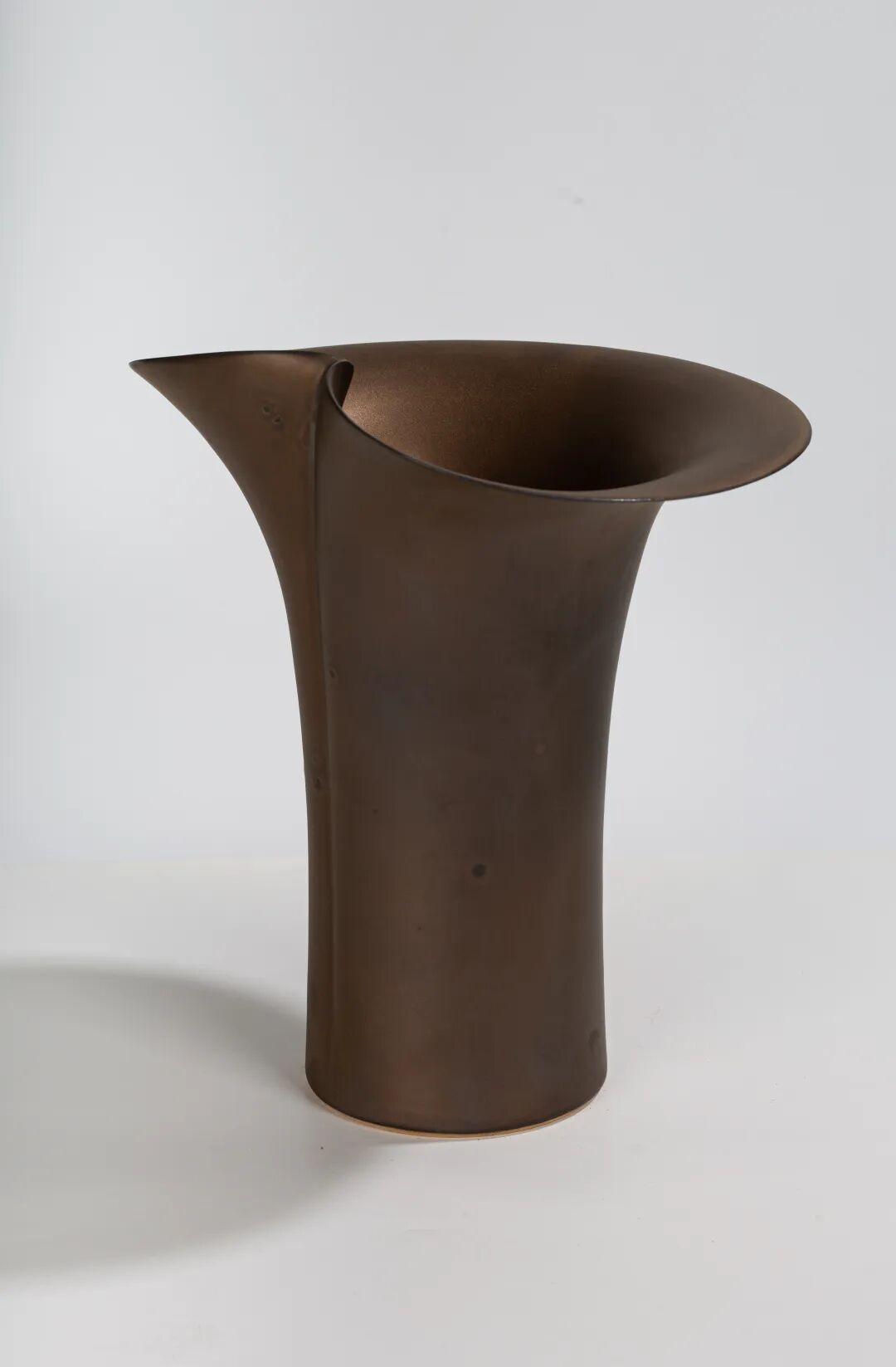
A:At that time, my main interest was in vessel form and the relationship between line and shape. I made some simplified variations in form. For glaze color, I adopted a northern celadon palette inspired by the“sky clearing after rain”hue—an image long associated with classical Chinese ceramic aesthetics and distinct from the sensibility of southern celadon. In terms of form, I drew on the rhythmic quality of calligraphic brushwork, allowing the vessel’s contour lines to breathe and undulate.
The work was based on my reflection on ceramic philosophy, using the vessel as a means to express an understanding of tradition. It was an attempt to seek a personal breakthrough within traditional paradigms, using a contemporary perspective. For me, tradition is not a fixed style, but a language that can be reinterpreted and transformed.
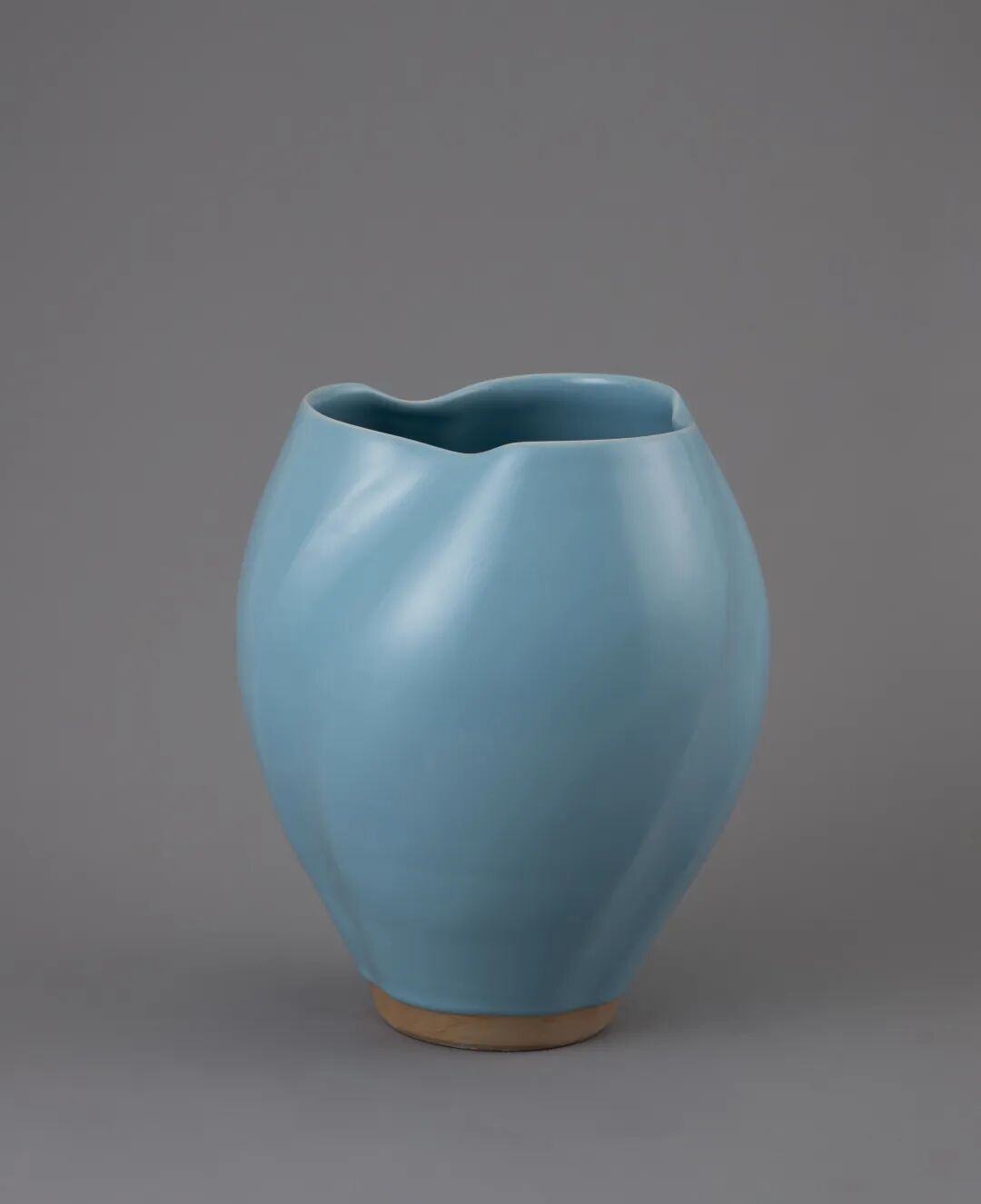
Q:Today, there seem to be two extremes: one deeply immersed in tradition and unable to break free, and the other abandoning tradition altogether in pursuit of conceptual expression. How do you view these two states?
A:I think the problem may lie in a lack of communication. Deep engagement with tradition and focused dedication to a particular craft is not a bad thing. Treating ceramics as a conceptual medium for experimentation is also very valuable. But the two need to understand each other.
You can choose your own direction, but you shouldn’t be completely ignorant of what’s happening in the other dimension. Higher education should provide the foundation for this exchange and discernment—teaching both craft and history, while also introducing contemporary art theory.
Q:Your work is grounded in traditional vessel paradigms while incorporating a contemporary viewpoint. So in your opinion, tradition and the contemporary are not opposites?
A:Tradition is actually fluid. Today’s contemporary may become tomorrow’s tradition. We study tradition not to replicate the past, but to understand where we come from—that is the foundation of creation. At the same time, we must broaden our horizons and understand what is happening in the world today.
One can have a Chinese heart, but that doesn’t mean blindly rejecting external ways of thinking or methods.
Q:What do you think is the greatest challenge facing contemporary ceramic art today?
A:Perhaps it is finding the balance between “expression” and “inheritance.” Many works today place strong emphasis on concepts, which is positive. But when conceptual pursuit becomes excessive, works can feel “floating,” lacking depth or direction.
Craft is the foundation. If we completely abandon craftsmanship, creation may contradict the nature of the material and become an empty structure. Concept is the upper level; the two are not contradictory.
A healthy creative ecology, in my view, should be based on inheritance, innovation, openness, and collaboration. Inheritance comes first: understanding Chinese ceramic history, knowing who you are, where you come from, and what you want to express. This doesn’t mean rejecting other cultures or art forms—understanding them is necessary. But one must maintain judgment. If expression overrides this foundation, confusion or even loss of self may follow.
Q:Next year, the Biennale will be held concurrently with the International Academy of Ceramics(IAC)Congress. Do you have any special expectations for this “grand event”?
A:The theme of “the future” is excellent. Combined with the IAC Congress, it allows for more comprehensive and in-depth discussion of the relationships between ceramics, technology, environment, and society. Especially in the context of AI and AIGC, it’s worth exploring how ceramics—one of the oldest yet most contemporary art forms—can dialogue with new technologies and contexts, and how this will influence the younger generation of artists.
I hope it will foster more cross-disciplinary and cross-cultural exchanges.