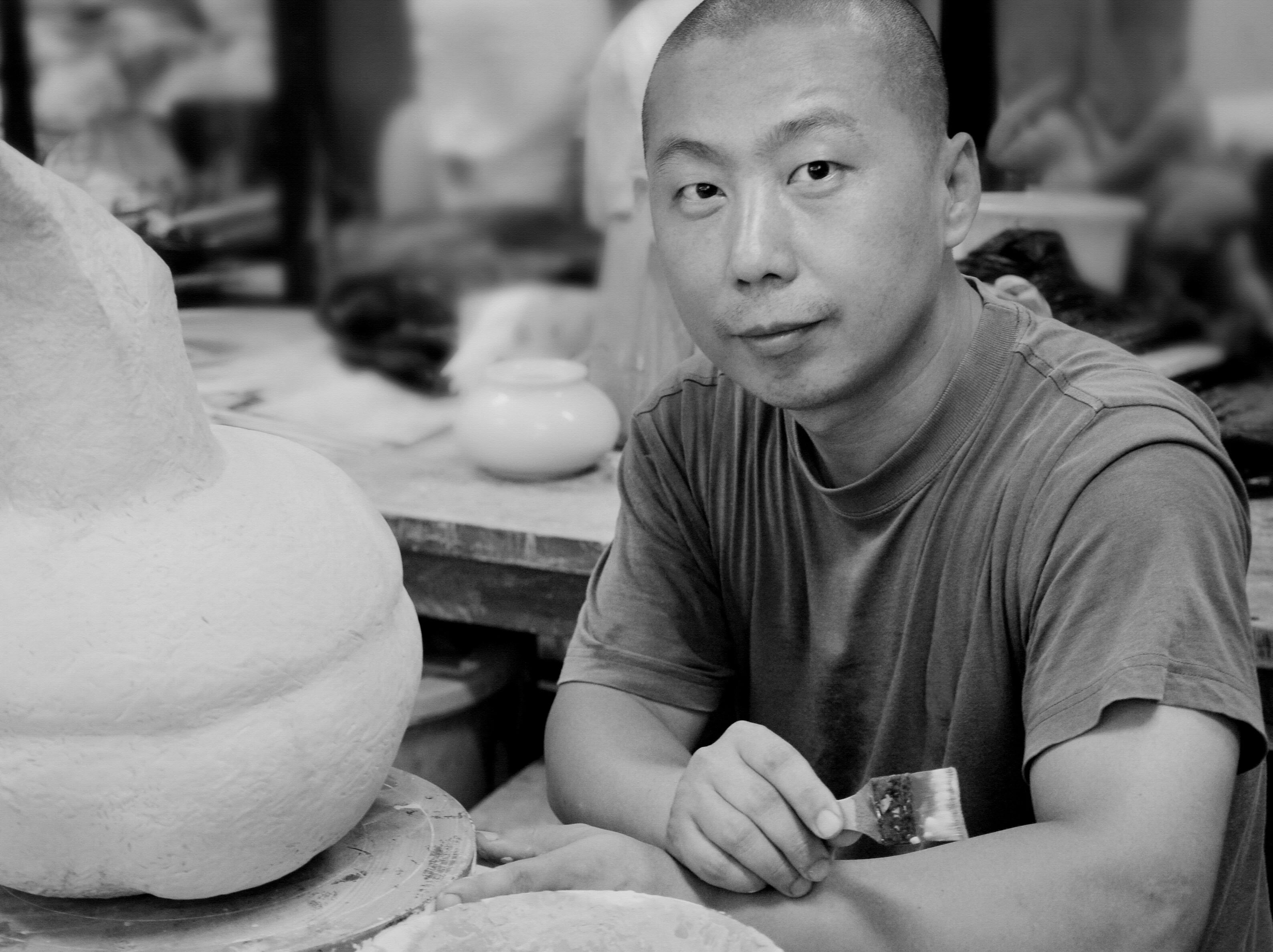
Wang Qi
Director, Ceramic Art & Design Teaching and Research Section,
Guangzhou Academy of Fine Arts
Member, Ceramic Art Committee, China Artists Association
Member, International Academy of Ceramics (IAC)
Interview Notes:
From the former Central Academy of Craft Art, through ten years of immersion in“free ceramic art”in Germany, to deep engagement in teaching and research at the Guangzhou Academy of Fine Arts, Wang Qi’s ceramic practice and thinking unfold across cultures and systems—reacting, transforming, and taking shape. When Jingdezhen kaolin encounters global currents of contemporary art, new answers emerge from the collision between tradition and innovation. This conversation with Wang Qi reveals the perseverance and reflection of a ceramic art educator deeply committed to the field.
The Jingdezhen Biennale is far from a simple accumulation of works; it is a platform that catalyzes a chemical reaction between the genetic code of traditional craftsmanship and contemporary ideas. The influx of young people injects vitality into this ancient ceramic city. With fearless freedom, they release distinct artistic positions on the exhibition floor.
In Wang Qi’s calm narration, one senses an optimism about the future—rooted in confidence without limits and freedom without hesitation. Perhaps this is the most precious“catalyst”in all artistic creation: free growth grounded in fertile soil.
Wang Qi
Director, Ceramic Art & Design Teaching and Research Section,
Guangzhou Academy of Fine Arts
Member, Ceramic Art Committee, China Artists Association
Member, International Academy of Ceramics (IAC)
Interview Notes
Q = Yu Lingna
A = Wang Qi
Q: From your studies at the Central Academy of Craft Art to further training in Germany, and then settling at the Guangzhou Academy of Fine Arts, you have always emphasized material and technique. Jingdezhen has deep traditions but is also an active site of contemporary experimentation. Do you think the Biennale can catalyze a deeper“chemical reaction”between its local genetic code and global artistic currents, rather than a simple juxtaposition?
A: It is precisely influential exhibitions like the Biennale that can truly drive Jingdezhen’s“transformation.”The traditional skills here have never been sealed away; they have always been studied and practiced. As a result, the ceramic language passed down for thousands of years possesses strong vitality and inclusiveness. Today’s Jingdezhen is rapidly modernizing as a city, and countless young people are drawn to its increasingly open and inclusive atmosphere. They have become the core source of its vitality, giving contemporary artistic ideas room to circulate and grow.
The scale, professionalism, and international influence of the Jingdezhen International Ceramic Art Biennale—combined with sustained investment—have, in a relatively short time, established a“de-hierarchized”platform for dialogue in contemporary ceramic art. In the works of young people from around the world, new concepts and perceptions are fully released. The Biennale has truly become a catalyst that allows contemporary artistic thought to take root and sprout in kaolin clay.
Q: Based on your observation of the first two Jingdezhen Biennales, has it successfully catalyzed the integration of Jingdezhen’s“traditional craft genes”with“global contemporary thinking”? What does this reveal about the vitality and bottlenecks of China’s contemporary ceramic ecosystem?
A: First of all, I believe that within the Biennale’s academic field, traditional craft genes and contemporary thinking have already generated a chemical reaction that goes beyond simple juxtaposition. Through this platform, our ideas, techniques, and materials are presented to—and shared with—the world, while engaging in two-way interaction. Our traditional craft genes themselves are highly practical and fluid, and they are also capable of influencing so-called“global trends.”
Secondly, we should not underestimate the central role that large-scale exhibitions play in promoting artistic thought. This is precisely one of the reasons why the Biennale needs to continue.
Today, the threshold for ceramic creation at the individual level has been significantly lowered. Equipment is sophisticated, and studio space is relatively accessible. This provides conditions for experimentation and innovation, and also fosters a broader base of participants. In short, any project with active participation from young people tends to have a promising future.
Q: How do the times and the social environment influence artistic creation? What notable changes have emerged in ceramic art in recent years?
A: Different historical contexts shape different expressive logics and value orientations in artworks. Most art forms have their own developmental trajectories. In contemporary ceramic art, today’s social environment and technological progress are driving changes in creative concepts and improvements in technical capability. As a result, ceramic works are also changing: the themes artists engage with are becoming increasingly diverse; there are more options for forming processes; and artists are more willing to work in large spaces to create large-scale works. Advances in post-production techniques have also made works increasingly refined. These may well become trends for a certain period—but they are also aspects we need to remain cautious about.
Q: Can the strong sense of presence and social interaction at the Biennale compensate for certain limitations of academic education, offering young artists a model of“learning in a boiling现场”? What impact or supplementation does this bring to teaching?
A: The Biennale site can indeed be very“boiling,”but on-campus teaching has a stable system that has been passed down and continuously refined over many years. As someone working on the front line of teaching organization, I believe the Biennale is one of the few major events in China where one can observe high-level ceramic works on site. We all value such opportunities for participation, learning, and exchange.
Since 2018, the ceramic program at the Guangzhou Academy of Fine Arts has focused on linking with industry, especially through industry–academia–research collaborations with architectural ceramics enterprises in Foshan. Our aim is to cultivate application-oriented talents who can contribute to industrial development. We regard ceramic creation as an important form of training for students to master materials and techniques and to enhance their aesthetic literacy in ceramics—capabilities that enterprises also highly value in talent recruitment.
Therefore, for us, the Biennale functions as a high-quality archive of exemplary works. We organize and lead students to visit the exhibition, observe outstanding works, and participate in this major industry event.
Q: As a director of a teaching and research section, how do you think institutions should proactively engage deeply with the Biennale and transform its energy into sustainable teaching resources rather than a fleeting celebration? Are there concrete mechanisms?
A: The curatorial themes of the Biennale often closely follow frontier trends in ceramic art, such as material experimentation, cross-disciplinary integration, and future-oriented thinking. As a section head, we can try to break down each Biennale theme into specific teaching topics and integrate them into professional courses. This allows students to engage directly with international frontier issues within their coursework, rather than completing assignments in isolation.
During the Biennale, leading ceramic artists and curators from around the world gather—this is an exceptionally high-quality academic resource. We can cooperate with the Biennale organizing committee to invite some participating artists into classrooms for lectures and workshops, or even have them co-supervise postgraduate projects with faculty members, jointly completing creative projects of academic value.
In short, we need to move beyond the short-term goal of“competing for awards”and truly bring the resources of international ceramic platforms into the classroom, allowing the energy of the Biennale to nourish the sustainable development of ceramic education.
Q: With the involvement of technologies such as AI, have the core criteria for judging ceramic works been shaken? Are“the warmth of the hand”and“emotional investment”still irreplaceable foundations?
A: The assistance of artificial intelligence has indeed expanded the boundaries of ceramic creation, and the use of mechanical power has given rise to entirely new forms of work. However, for quite a long time, this mode of creation will not become mainstream, let alone replace traditional practices. Especially in the field of art, most creators have long-established working methods, and only a small number are willing to experiment with applying new technologies to ceramic creation. While the proportion of audiences interested in new technologies may be somewhat higher, the extent of AI’s involvement in ceramic art ultimately depends on the willingness of both users and audiences.
Ceramic works formed without handcraft lack“breath”and the subtle imperfections of manual making, in exchange for complex forms and extreme precision. Yet it is precisely this“perfection”that highlights the“organic quality”of handmade works. In contrast with technology, handcrafted civilization becomes even more prominent as the value foundation of ceramic creation—and all the more worthy of our cherishing.
Q: There is often a perceived divide between industry and art in ceramics. Located next to Foshan, how does the Guangzhou Academy of Fine Arts view this issue, and how can bridges be built?
A: Artists’works and corporate products can, in fact, merge in both directions. Brands need artistic empowerment to enrich their cultural depth, and artists are the ultimate practitioners of artistic creation. The collision between the two can certainly spark new creative inspiration.
What must be clarified is that artists’styles vary greatly, just as brands have different positioning. Cooperation requires sufficient mutual understanding. In terms of collaboration models, the first principle is to respect individual differences and find suitable modes of cooperation in order to achieve win–win outcomes. Secondly, collaboration formats are not fixed; given the right opportunities, artists and enterprises can explore more innovative paths together.
Of course, brands have their own development agendas, and artists should not expect to deeply steer a brand’s direction. Although there are already many successful cases, there is still considerable room for growth and improvement in the integration of industry and art.
Q: In the work of the younger generation, what kinds of exciting“freedom and fearlessness”do you see? What are their biggest temptations or pitfalls? What is the core value of participating in the Biennale for them?
A: I think the freedom and fearlessness of young people are built upon rapid information circulation and improved economic conditions—or, in other words, these conditions give them confidence in their creation. Those who can fully leverage these advantages, combined with solid personal qualities and diligence, often stand out quickly. After all, platforms like the Biennale offer them opportunities to emerge.
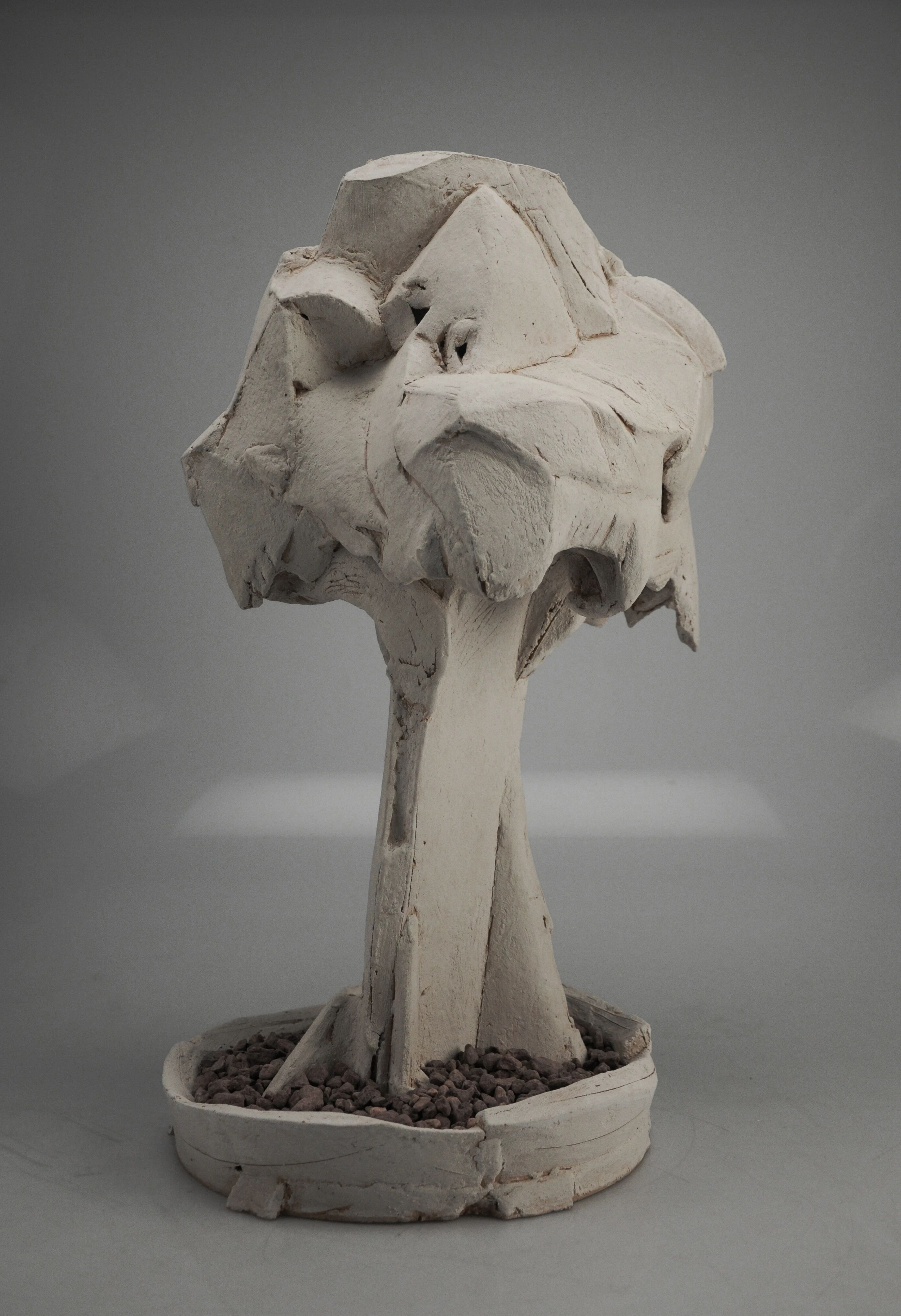
Personally, I believe young people should be confident but not reject communication. They need their own creative concepts and aesthetic standards,坚持自我风格并持续输出, rather than spending long periods imitating award-winning works or famous masters as benchmarks.
We encourage students to participate in important competitions and exhibitions. Frankly speaking, this not only helps them accumulate start-up funds and gain industry recognition, but also allows them to share their creative positions on international platforms and even form highly recognizable personal styles. All of this lays a solid foundation for their long-term commitment to ceramics.
Q: For the third Biennale in 2026, beyond showcasing works, where do you most hope to see breakthroughs?
A: In my daily practice, I have noticed that if a work is not created specifically for a competition, it may diverge from the judging criteria. This made me realize that competitions may operate with relatively fixed evaluation systems. Although the Jingdezhen Biennale has already divided works into multiple categories, I still worry that some outstanding ceramic artists may miss out on awards and attention as a result. Can a competition simultaneously achieve the goals of“selecting excellent works”and“supporting outstanding artists”? This is both my question and my expectation. Perhaps introducing mechanisms such as a“Biennale Non-Selected Exhibition”or a“Biennale Recommendation Exhibition”could address this issue.
As for academic themes and exhibition mechanisms, I think previous curatorial teams have already done an excellent job—their efforts deserve great respect.
I also hope that while presenting the highest international standards of ceramic art, the Biennale will, in its subsequent stages, pay more attention to small-scale works with strong ideas—works that are not so grand, not so complex, not so“high-difficulty.”This would also be an expansion of the Biennale’s content.
Q: Finally, could you offer a few words to young ceramic artists around the world who are about to engage in the third Biennale and broader creative journeys?
A: In truth, I feel more envy than anything else—they are growing up in such a favorable era. Most young people can find suitable studio spaces and firing conditions, and can take their works to exhibitions and competitions they admire. Everyone can operate their own social media, share their creative processes, and attract like-minded followers.
But I hope they can make good use of these external conditions, allowing resources to serve them rather than being overly distracted by external factors. I hope they can maintain their original creative intentions, enjoy longer artistic lives, and always take pleasure in the beauty that ceramic creation brings.
2026“The Future of Ceramics”Jingdezhen International Ceramic Art Biennale
Registration Deadline:December 31, 2025
Registration Portal:http://www.cjicb.com/News20251211.html